
Cane is back in Portuguese homes, and not by chance. It is a natural material, light to the eye, that lets air and light through and gives a room texture without weighing it down. On a chair, a chest of drawers or a headboard, it turns a simple piece into one with character.
What cane is
Cane is a weave made from plant fibres, woven in an open mesh. On our pieces it is applied to wooden frames: on chair backs, on drawer and door fronts and on headboards. The result is a light, strong surface with a pattern that never goes out of style.
Where to use cane at home
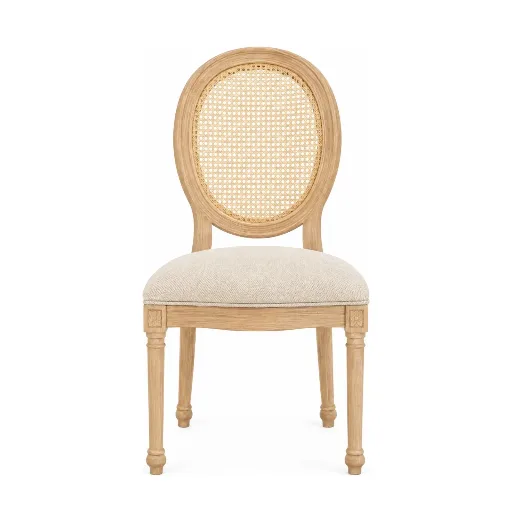
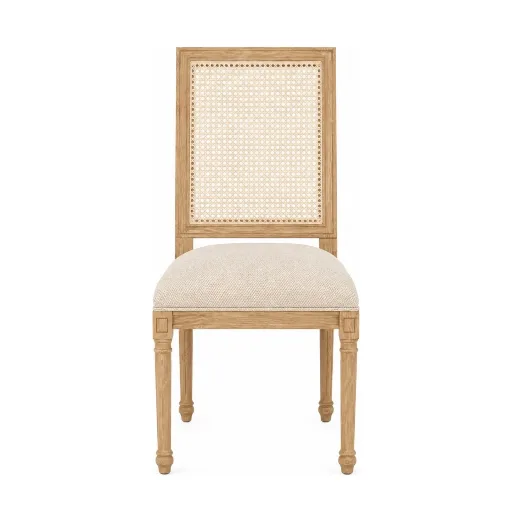
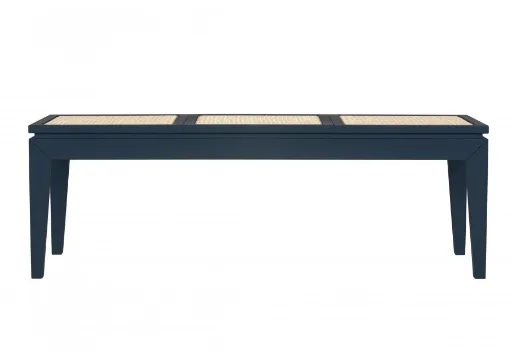
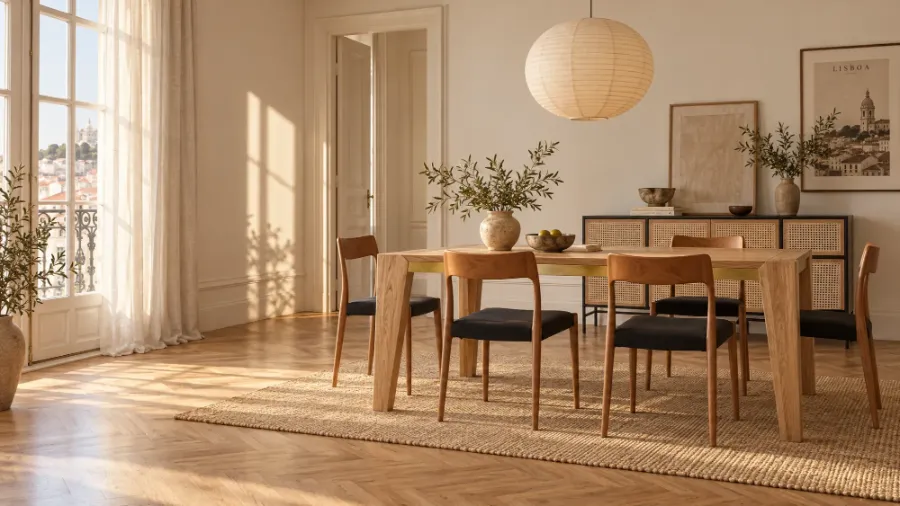
In the dining room. Chairs are the easiest way to start. The Classic chair with cane has a cane back and an upholstered seat, in a choice of six fabrics; it also comes with arms. The Provence chair follows the same idea, with more classic lines. For a long table, the Verano stool, with a natural cane seat, is a relaxed alternative to chairs along one side.
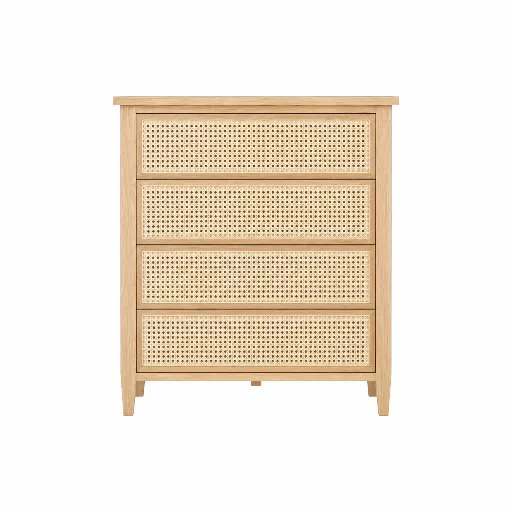
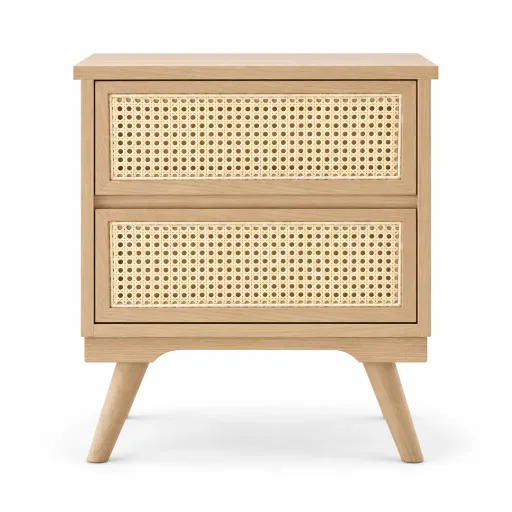
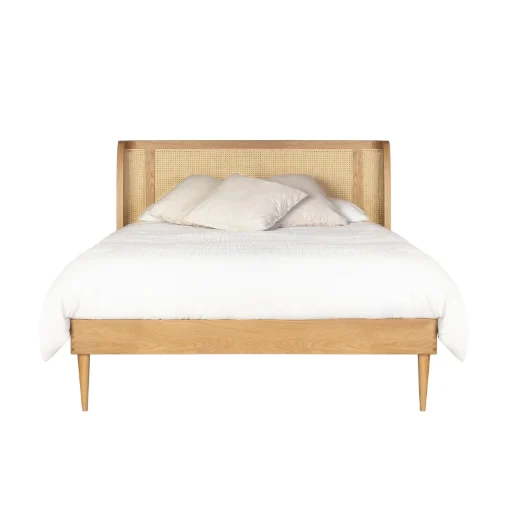
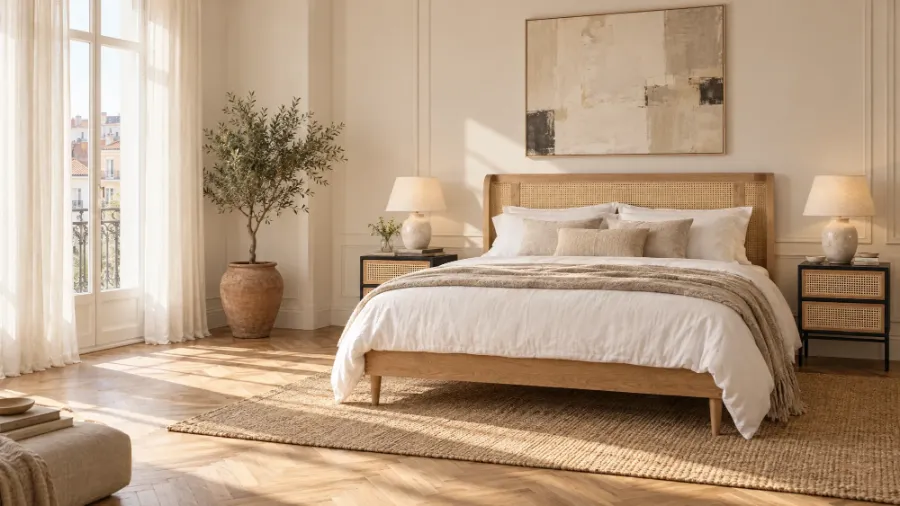
In the bedroom. A cane headboard gives the bedroom a calm, natural feel. The Denmark Curved bed has a solid oak frame and a natural cane headboard; the Denmark, Provence, Antoinette, Classic and Allegra beds bring the same texture in different styles, from Nordic to Provençal. See them all in cane beds. To complete the room, the Denmark bedside table with cane and the Verano chest of drawers, with cane drawers, in 80 cm or 120 cm. For storage, the Verano wardrobe has cane door fronts.
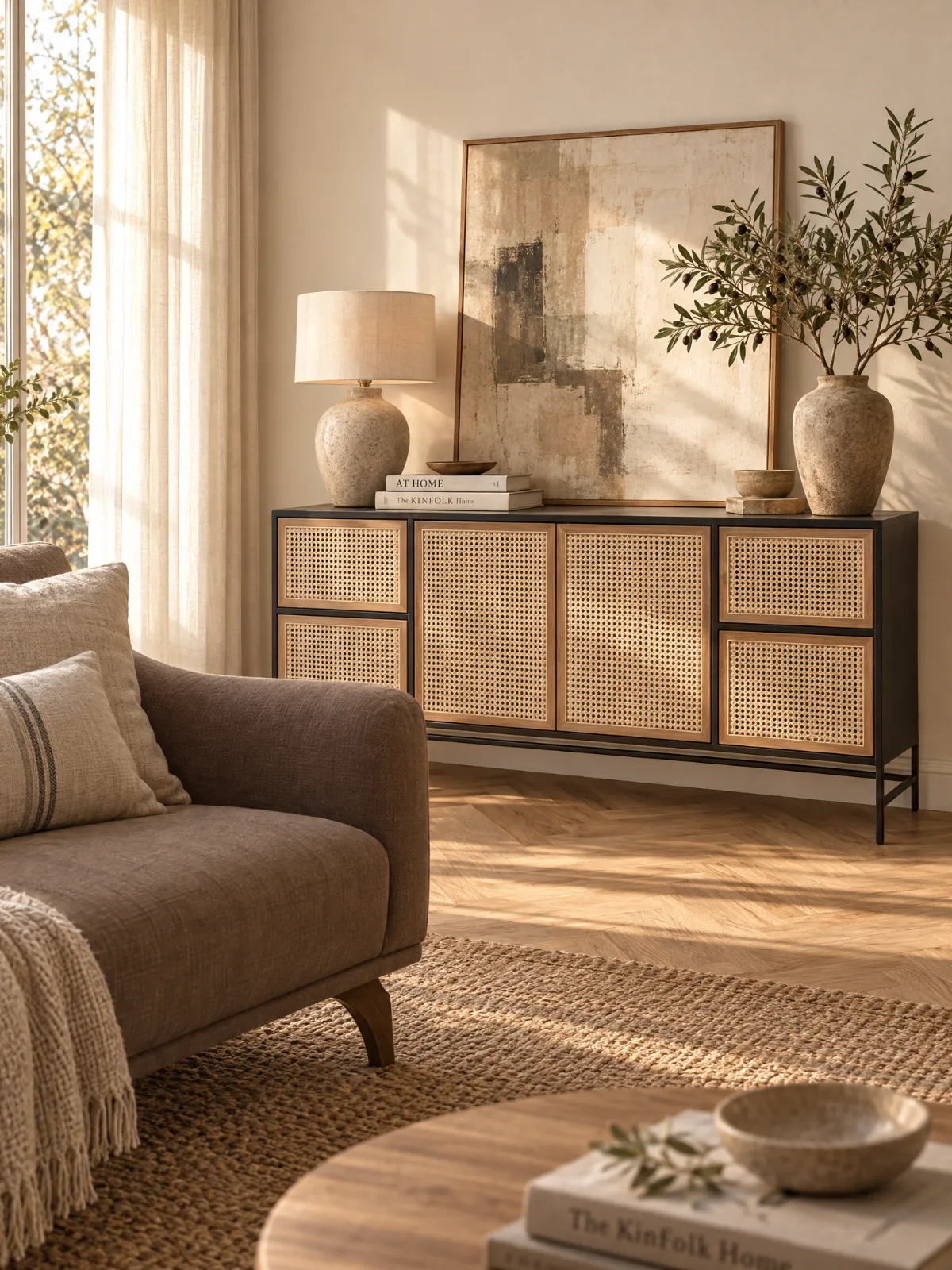
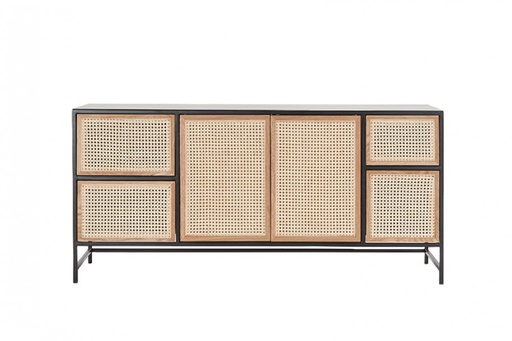
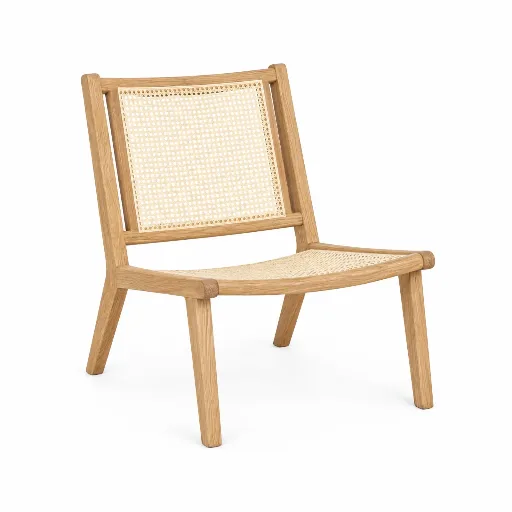
In the hallway and living room. The Verano sideboard, with cane doors and drawers, and the Nairobi sideboard, with a black iron frame, natural oak surrounds and natural cane fronts, solve storage with a light touch. For a narrower hallway, the Nairobi console table combines iron, a solid oak top and cane. And for a reading corner, the Manhattan armchair has a natural cane seat and back.
How to pair cane
- With natural wood or oak: the most classic pairing. Cane and wood have warm tones that complement each other.
- With white or light colours: the cane stands out and the room feels brighter.
- With black iron: a more urban contrast, as on the Nairobi sideboard and console table.
- Without overdoing it: two or three cane pieces in a room are enough. The rest can be plain, so the texture can breathe.
How to care for cane
Cane is strong, but it is a natural material and appreciates a little care:
- Dust with a soft brush or a vacuum cleaner on low power, with the brush attachment.
- To remove a mark, use a cloth that is only just damp and let it air-dry.
- Avoid many hours of direct sunlight and heat sources such as radiators and fireplaces: cane can dry out and lose its elasticity.
- Do not sit or lean on cane areas that were not designed for it, such as a chair back or the front of a chest of drawers.
Over time, cane takes on a more golden tone. It is not a defect: it is the patina of a living material.
Designed and made in our factory
All these pieces are designed by us and made in our factory in Paços de Ferreira: the technical drawings, the CNC machining, the wood, the drawers, the application of the cane and the hand finishing. Many can be made to measure or in another finish. If you are unsure which piece is right for your home, talk to us.
PIECES IN THIS ARTICLE
MADE TO LAST. SINCE 1997.
Pieces made to last
Wooden furniture, designed and made in our own factory in Portugal since 1997, and made to measure.
VIEW THE COLLECTIONTALK TO US

 and then Add to Home Screen.
